Cooling That Stops Food From Spoiling
Refrigerator Repair in Lewis Center for units that no longer hold safe temperatures, freeze food in the fresh compartment, or leave condensation pooling inside drawers
Refrigerators that fail to maintain temperatures between thirty-five and thirty-eight degrees create immediate food safety concerns. Ray-One LLC diagnoses compressor failures, thermostat calibration drift, damaged door gaskets, evaporator coil issues, and refrigerant leaks that prevent proper cooling in standard, French door, side-by-side, and built-in refrigerator configurations throughout Lewis Center and surrounding Central Ohio communities. When internal temperatures rise above forty degrees for more than two hours, perishable items including dairy, meat, and prepared foods become unsafe to consume.
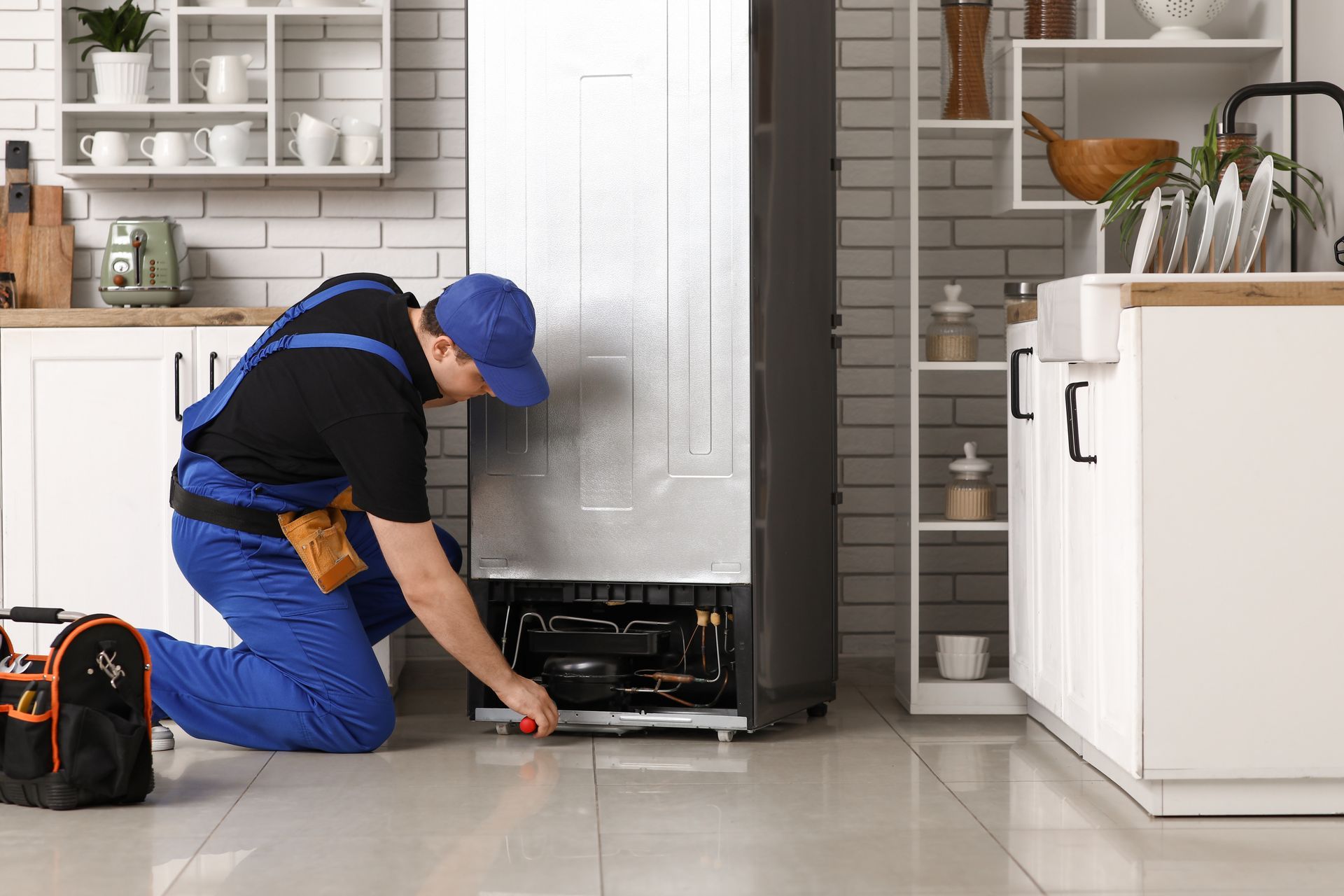
Diagnosis begins with temperature measurements in multiple zones, inspection of door seals for gaps or tears, and evaluation of compressor operation to determine if the motor is cycling correctly. Technicians check condenser coils for dust buildup that restricts airflow, test defrost timers to verify proper cycling, and measure voltage at the control board to rule out electrical supply problems. The cooling system is either actively running or completely inactive, which narrows the list of potential component failures.
Request a refrigerator evaluation to identify the specific component preventing your unit from cooling properly.
What Proper Cooling Requires
Refrigerators circulate refrigerant through a sealed system involving a compressor, condenser coils, evaporator coils, and an expansion valve. The compressor pressurizes refrigerant, the condenser releases heat to the surrounding air, and the evaporator absorbs heat from inside the refrigerator compartment. When any component in this loop fails, the entire cooling process stops or operates inefficiently. Thermostats signal the compressor to start and stop based on internal temperature, while defrost systems prevent ice buildup on evaporator coils that would block airflow.
Once the repair is completed, internal temperatures stabilize within four to six hours, condensation no longer forms on interior surfaces, and the compressor cycles on and off at regular intervals rather than running continuously. Food stored in crisper drawers stays fresh without freezing, and frost no longer accumulates along the back wall or around air vents. The refrigerator operates quietly without the grinding, clicking, or buzzing sounds that indicate motor strain or fan obstructions.
Some repairs require evacuating and recharging the refrigerant system, which involves specialized equipment and certification. Door gasket replacement is straightforward, but compressor replacement requires disconnecting refrigerant lines and installing a new sealed unit. Thermostat and defrost timer replacements typically restore function without accessing the cooling system itself, making them faster and less expensive repairs.
Answers to Frequent Service Questions
Homeowners want to know how quickly repairs can restore safe food storage and what signs indicate serious cooling system problems.
What causes a refrigerator to stop cooling suddenly?
Compressor failure is the most common cause, followed by thermostat malfunctions and refrigerant leaks. Blocked condenser coils and failed evaporator fans also prevent proper cooling but are less likely to cause immediate temperature loss.
How long does it take for a refrigerator to cool down after repair?
Most units reach safe storage temperatures within four to six hours after the cooling system is restored. Built-in models and larger French door units may take up to eight hours to stabilize fully, especially if they were completely warm before repair.
Why does frost build up inside the freezer compartment?
Defrost timers that fail to cycle properly allow ice to accumulate on evaporator coils, which blocks airflow and prevents cold air from circulating. Damaged door seals also allow humid air to enter the freezer, where it condenses and freezes on interior surfaces.
When should I repair a refrigerator instead of replacing it?
Refrigerators less than ten years old with isolated component failures are usually worth repairing, especially if the compressor and sealed cooling system are still functioning. Units older than twelve years with multiple issues often cost more to repair than their remaining useful life justifies.
How does summer heat in Central Ohio affect refrigerator performance?
Higher ambient temperatures force compressors to run longer cycles to maintain internal cooling, which increases wear on motors and capacitors. Condenser coils that are clogged with dust become even less efficient in hot conditions, causing compressors to overheat and fail prematurely.
Ray-One LLC restores refrigerator cooling throughout the Greater Columbus Area for homeowners who need food storage temperatures stabilized before spoilage occurs. Schedule refrigerator repair before cooling problems worsen and force emergency appliance replacement.